
1920s shoes for men

As an Amazon associate, Comfy-Kicks.com earns from qualifying purchases at no cost to you.
For those who wanted a touch of edge, loafers and brogues gained traction, especially among businessmen and socialites. The rise of the “flapper look” also influenced casual footwear, with moccasins and slip-ons becoming trendy among younger men. Leather was the dominant material, though some opted for suede or patent finishes for a more luxurious feel. The shoes of the 1920s were all about comfort and style—practical yet stylish, just like the decade itself.
1920s shoes for men in 2026
1. Black White Wingtip Brogues

In the 1920s, men’s dress shoes often balanced style with practicality, favoring sleek oxfords and pointed-toe brogues. These styles emphasized polished leather, sharp wingtips, and refined lacing for a polished look. The two-tone design of these shoes mimics the era’s bold yet understated elegance, blending sophistication with durability.
The wingtip shape and brogue detailing add a touch of vintage flair, perfect for formal occasions or smart-casual settings. Unlike floppy shoes of the time, these maintain a sharp silhouette while offering comfort and versatility for both city walks and evening events.
2. Gangster Spats Shoe Covers

In the 1920s, men’s footwear often demanded both style and durability. Gangster spats were essential for protecting shoes while maintaining that sharp, edgy look. They fit snugly over boots or dress shoes, shielding them from mud, rain, and wear without sacrificing the polished aesthetic.
These spats were more than just coverings—they were a statement. The white color of the Roaring Twenties paired perfectly with dark suits, giving a sleek, sophisticated edge. They kept shoes pristine for photos, clubs, and street corners alike.
3. Wingtip Dress Shoes

In the 1920s, men’s wingtip oxfords were all about sharp tailoring and polished elegance. These shoes featured pointed toes and sleek, tapered designs that complemented the era’s refined suits. The black-and-white towing pattern added sophistication, blending classic sophistication with subtle contrast.
The wingtip toe not only defined style but also practicality—durable leather held up well in city life. A well-made oxford like this would pair effortlessly with formal wear, making them ideal for business or evening events. The craftsmanship of the time ensured they stood the test of time.
4. Two-Tone Perforated Wing Tip Lace-Up Oxford Shoes

In the 1920s, men’s dress shoes balanced style and function, favoring sleek oxfords with polished laces and smooth leather. These shoes demanded precision—sharp wing tips for authority, minimal perforations for breathability without sacrificing formality.
The two-tone design of these shoes mimics the era’s bold yet refined aesthetic, blending classic craftsmanship with modern versatility. The perforations keep feet dry, while the lace-up ensures a snug fit, making them practical for both office and social settings.
5. Classic Brogue Wingtip Oxford Dress Shoes
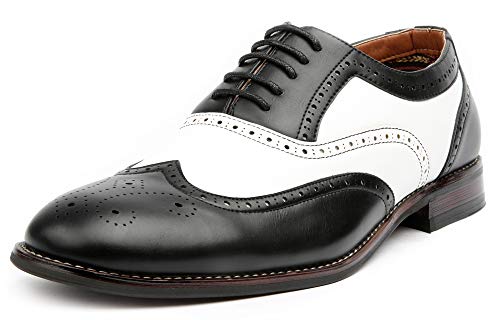
The Arthur Wingtip Oxfords capture the refined elegance of 1920s men’s footwear, blending timeless sophistication with modern comfort. The classic brogue detail adds subtle texture, while the two-tone finish—black and white—mirrors the bold yet understated style of the era’s sharp suits.
These shoes offer the precision of a dress shoe with the relaxed fit of a spectator, ideal for both formal occasions and casual refinement. The wingtip shape enhances poise, making them a versatile choice for any polished look.
6. Classic Modern Oxford Wingtip Dress Shoes

In the 1920s, men’s dress shoes often favored sleek, polished styles with pointed toes and low heels, reflecting the era’s streamlined aesthetic. These shoes prioritized elegance over comfort, demanding rigid construction and minimal cushioning.
Bruno HOMME’s wingtip Oxfords bridge that gap with modern refinement. Their design keeps the classic 1920s silhouette while offering breathable leather and flexible soles for all-day wear. A practical upgrade for today’s demands.
7. Two-Tone Spectator Wingtip Oxford Shoes

In the 1920s, men’s dress shoes often balanced formality with subtle flair, and these two-tone spectator wingtip oxfords capture that era’s refined elegance. The perforations add breathability without sacrificing structure, while the laces ensure a snug fit for all-day wear. The clean white-and-black contrast mirrors the bold yet understated style of the Jazz Age, perfect for both office and social settings.
The wingtip design nods to classic 1920s silhouettes, offering a polished look that pairs well with suits and trousers. The medium width accommodates varied foot shapes, making them versatile for everyday use. These shoes blend tradition with modern comfort, staying true to the era’s taste while standing apart.
8. Men’s Dress Oxford Shoes

In the 1920s, men’s dress shoes often prioritized sleek, polished leather with pointed toes and low heels, reflecting the era’s polished aesthetic. Temeshu’s black oxfords blend that classic silhouette with modern durability, offering a refined look that suits both formal and casual settings.
The craftsmanship of 1920s shoes emphasized precision—sharp stitching, smooth soles, and sturdy construction. Temeshu’s design mirrors this with a clean, professional finish that holds up well over time, making it practical for daily wear.
9. Soft Cap-Toe Dress Shoes

In the 1920s, men’s formal footwear leaned toward sleek, polished designs with pointed toes and wingtips for a sharp, modern look. These shoes often featured smooth leather and minimal laces, emphasizing elegance over comfort. The cap-toe style was a staple, offering a refined silhouette while keeping the foot secure.
Bruno Marc’s version carries that timeless sophistication with its black wingtip and soft cap-toe. The lace-up design provides a polished finish while maintaining durability, much like the era’s classic styles. Perfect for evening wear, it bridges old-world charm with modern craftsmanship.
10. Dress Oxford Shoes

In the 1920s, men’s dress shoes like these oxfords stood as symbols of polished professionalism and social refinement. Made from polished patent leather, they exuded an air of sophistication, perfect for business meetings, formal events, or evening attire. The classic lace-up design ensured a secure fit, while the sleek silhouette aligned with the era’s streamlined aesthetic.
These shoes also served practicality, offering durability for daily wear while maintaining a sharp look. Their versatility made them ideal for both office settings and special occasions, embodying the balance of style and function that defined men’s footwear of the time.
